
©frey
✦
2023
my corner of the internet
This project made me realize the significance of contextual inquiry - i.e. the importance of observing and questioning the real user within their environment. Also while at first, | was thinking of the design concept on the lines of futuristic technology; came to a realization that it might it present the ideal solution.India is gradually progressing in its technological infrastructure, but for a bus information system to be successful | would have to strategize with the trickle up theory and not the other way round.
Reflection
Scene 1 displays information regarding the connectivity ofmajor bus stops from that particular bus stop. It alsodisplays information of the bus numbers that will go in thosedirections.
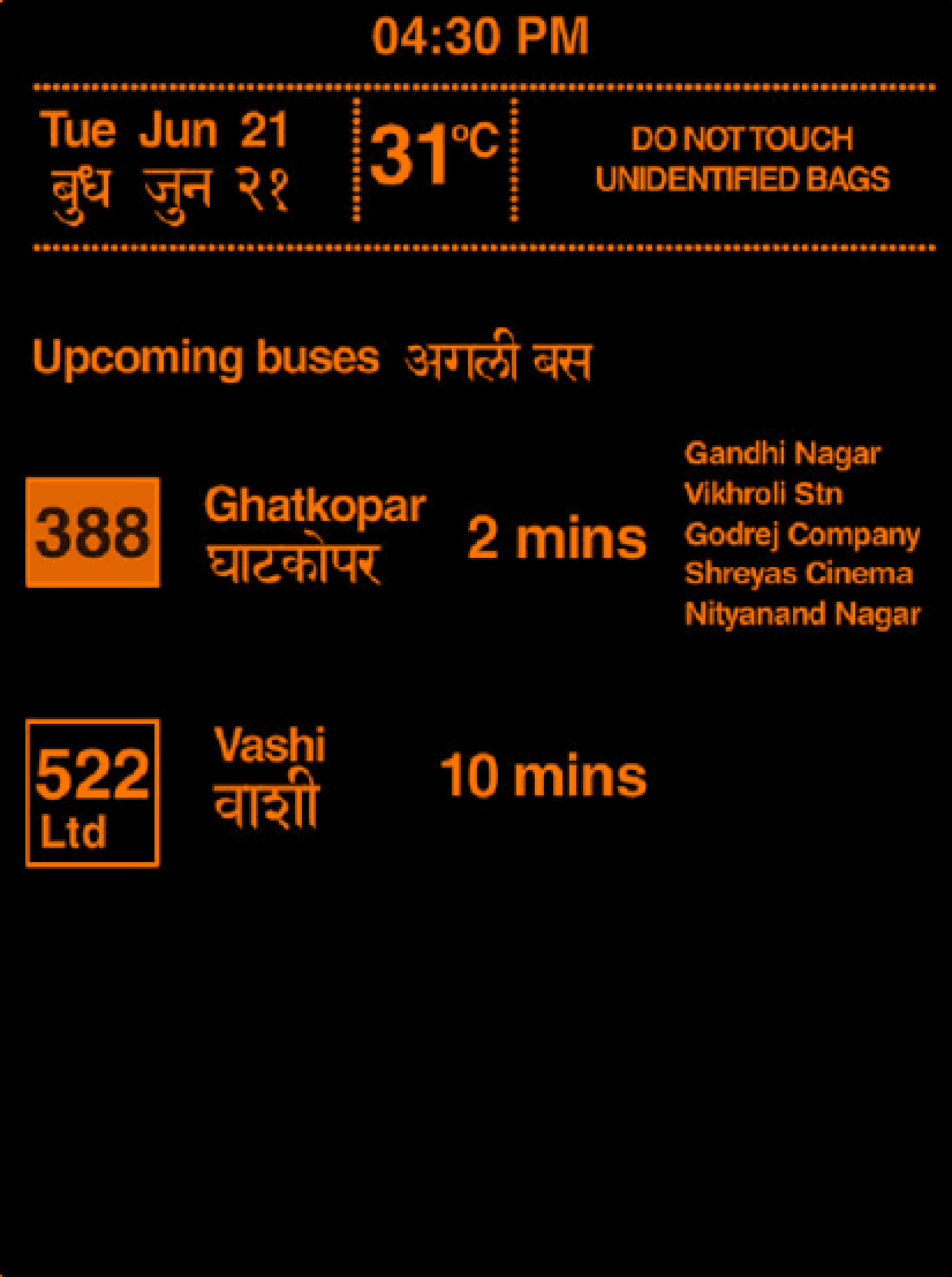
Scene 2 displays the upcoming buses to the bus stop. Alsodisplays the estimated time of arrival and lists the major busstops it will pass through
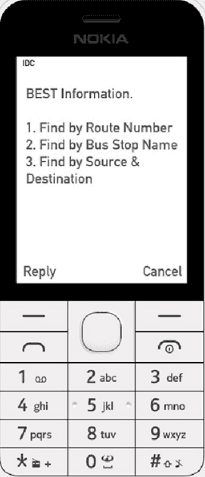
Case 1 | Short code flow to look for Stops on a bus route number.
1. Dial *BEST#
2. Reply with 1 to ‘Find by Route Number’
3. Reply with Route Number
4. View Source & Destination or go deeper to view complete route
5. Navigate through the long list by simple replies
6. Else go back to Main Menu to try other options
Case 2 | Short code flow to look for Routes numbers passing through ia Bus stop |
1. Dial *BEST#
2. Reply with 2 to ‘Find by Bus Stop Name'
3. Reply with Bus Stop Name
4. It asks for a confirmation as more than one results are found
5. Navigate through the long list by simple replies
6. Else go back to Main Menu to try other options
Case 3 | Short code flow to look for Routes between any Source &Destination
1. Dial *BEST#
2. Reply with 3 to ‘Find by Source & Destination’
3. Enter Source
4. It asks for a confirmation as more than one results are found
5. Enter Destination
6. It asks for a confirmation as more than one results are found
7. It lists that all the route numbers that go from source to destination
Prototype
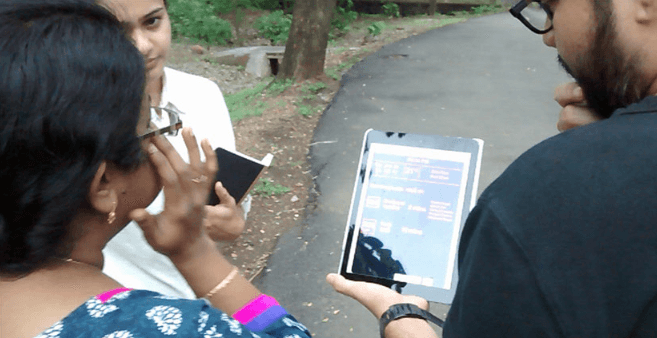
The Mumbai rains forced us to cut short our testing plan, so we could only test the LED Display Board. My teammate designed the interface on Adobe Flash. We ran the exported .swf on an iPad using Safari. We recruited users between the age of 30 to 40 for the test in the IIT Bombay campus. We asked them what could they comprehend,at what point would they need this in their journeys, and when would they ignore it.
Testing & Feedback
I narrowed down to 3 top level searches people could do, that solved most use cases:
+ Look for all stops that lie on a route R
+ Look for all stops that pass through a stop S
+ All routes that can take you between stop A & B
Trade off: Each incoming Shortcode message has a 160 character limit, further lowered by characters reserved for instructions to fetch next message, or going back to the previous message, main menu etc.
The LED Display had two scenes:
Scene A: Display upcoming buses, with ETA, direction, and the major stops on its route that it will pass through.
Scene B: At intervals, it displays major stops, and the bus routes that go there.
Jumping from the insight about the travellers mapping a sense of direction by reading routes and destination names, we facilitated that by including Scene B which serves unobtrusive and casual visual reminders of all routes going towards the end destination direction.
ShortCode/USSD
I explored possible interfaces for Narayan that included Interactive voice response(IVR), Shortcodes (how we check minutes on our phones for example, dialing *646#), LED Display boards and touchscreen kiosks.
I went ahead with the combination of Shortcodes and LED Display boards as this combination had comparatively lower trade offs in terms of feasibility and ease of learning.
+ All feature phones from early 2000s to a smart phone from 2016 can run Shortcode
+ LED Display boards at major stops, can offer more information to more people, at once.
The Design
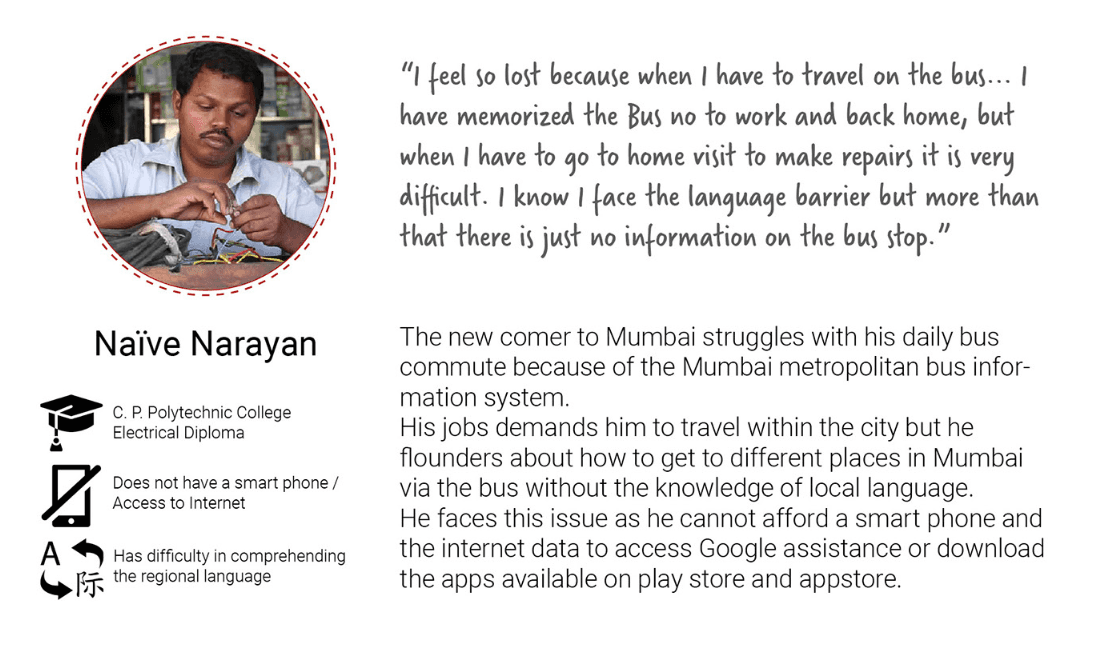
I found the ‘lower and middle income working segment’ group to be most compelling to design for, because most people from the group had never used a smart phone, Google Maps or any transit app.
The Affinity mapping reflected the following observations that dictated the next steps -
+ Most commuters only remembered their last mile destinations, not necessarily the nearest buss top. The goal was to respect this behaviour
+ The commuters knew at least one of these: boarding stop, destination stop, bus route number, directions, major stops on the way
+ People with low literacy level in Hindi, Marathi were forced to memorized the ‘visuals’ of the bus route number written in Marathi or Hindi and those who did not know English had to learn the numbers in English
+ People developed sense of directions by matching bus routes with the end destinations and could predict route direction by knowing the route number
*Hindi - First Language | Marathi - Regional Language of Mumbai
Insights
‘Who is the BEST Bus daily commuter?”
We went to different bus stops in Mumbai to interview bus commuters. After a few conversations, we managed to eliminate some red-herrings, like upper middle class city dwellers who grew up in upscale Mumbai, and tourists.The real majority users were -
+ Lower and middle income working segment; People who depended entirely on the bus network for their intra-city travel.
+ Students; School, tuition, or University students who would use the buses in combination with the Mumbai's suburban - railway network.
We performed affinity to classify user statements, breakdowns, insights and design ideas from our interviews.
Research
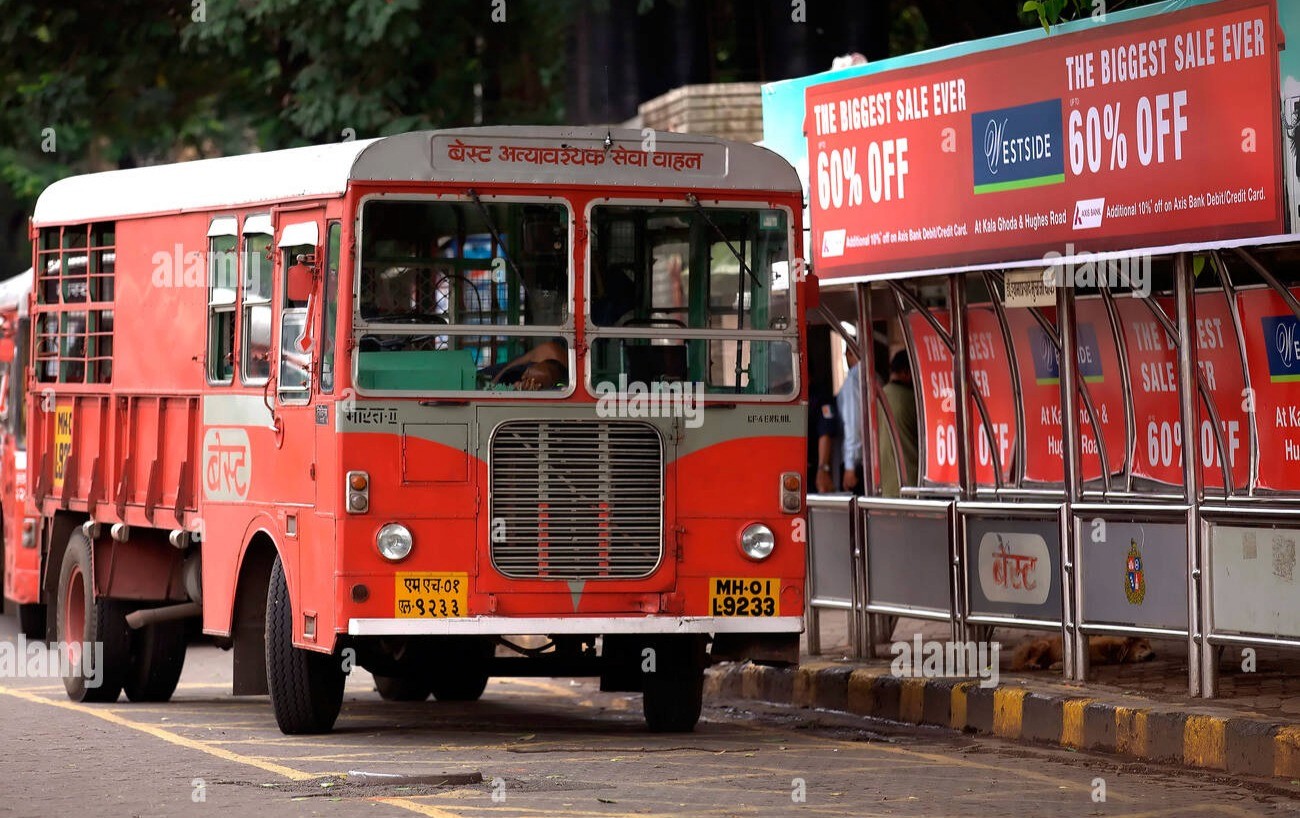
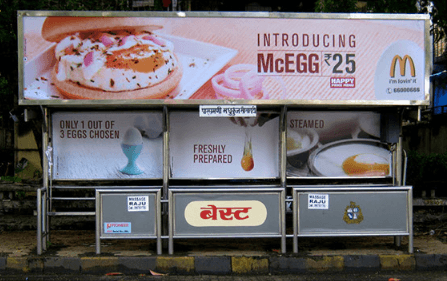
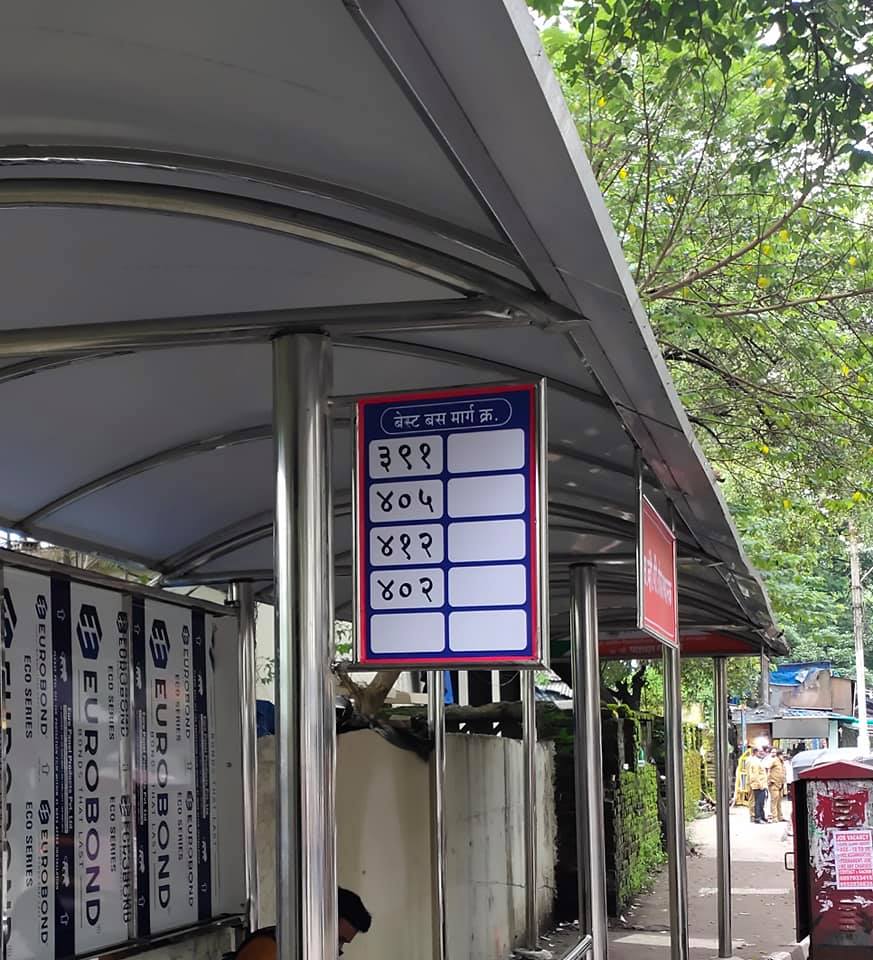
Typical bus stop scenes in Mumbai
While lately India has been a global feeder of technology, advancements within the country have lagged behind. This leads us to the following questions -
+ Could we use technology as a medium to inform commuters at bus stops?
+ How can it be done?
+ Why wasn't it implemented till date?
+ Is there even a need to incorporate need technology and innovations?
Problem Statement